
Shri Ram
Janmabhoomi
Temple
A comprehensive guide to the history, architecture, and spiritual significance of India's most sacred temple — the birthplace of Lord Rama.
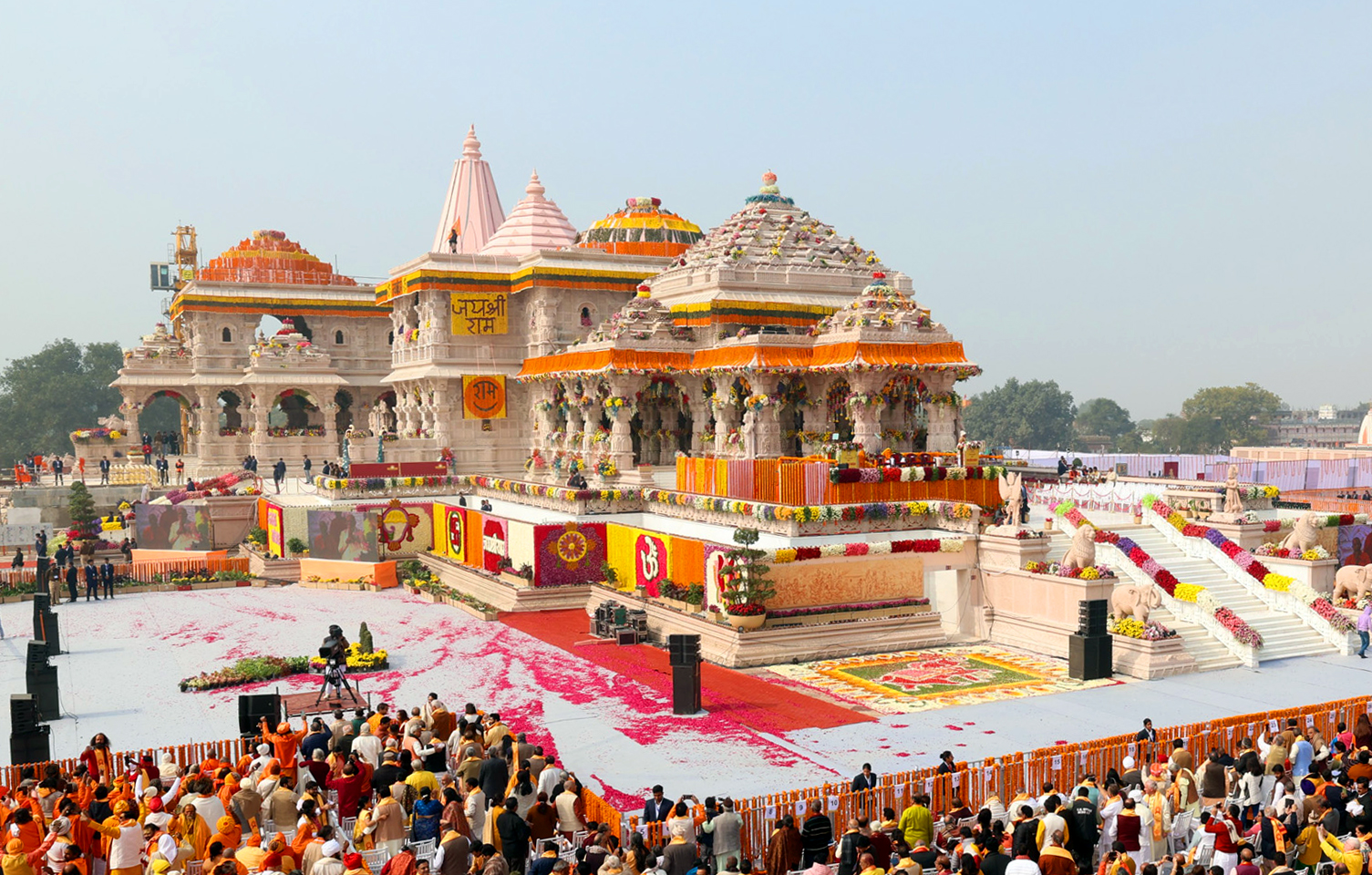
The Shri Ram Janmabhoomi Temple in Ayodhya, Uttar Pradesh, is one of the most sacred and historically significant Hindu temples in India. It is believed to be the birthplace of Lord Rama, the seventh avatar of Lord Vishnu and the central figure of the ancient Indian epic, the Ramayana. The temple's construction was completed in January 2024 and stands as a symbol of faith, cultural heritage, and resilience for millions of Hindus worldwide.
Historical Background of Ram Janmabhoomi
Ancient & Mythological Significance
According to Hindu scriptures, Ayodhya is one of the Sapta Puri (seven sacred cities) and the capital of the ancient Kosala Kingdom. The Valmiki Ramayana and other Puranas describe Ayodhya as the birthplace of Lord Rama, born to King Dasharatha and Queen Kaushalya in the Treta Yuga. Archaeological evidence suggests a temple dedicated to Lord Rama existed at the site since ancient times.
The Babri Masjid Controversy
- 11th–12th Century: Historical accounts suggest a grand temple stood at the site before the Mughal invasion.
- 1528: The Babri Masjid was constructed by Mir Baqi, a general of Emperor Babur, allegedly after demolishing a pre-existing Hindu temple.
- 18th–19th Century: Hindu groups claimed the site as Ram Janmabhoomi and demanded the right to worship there.
- 1853: The first recorded violent clash occurred between Hindus and Muslims over the site.
- 1949: An idol of Lord Rama appeared inside the mosque, leading to disputes. The government locked the site, declaring it disputed.
The Ram Janmabhoomi Movement (1980s–1992)
- 1984: The Vishwa Hindu Parishad (VHP) launched a movement to reclaim the site.
- 1986: A court ordered the opening of the site for Hindu worship.
- 1990: L.K. Advani led the Rath Yatra to mobilise nationwide support.
- December 6, 1992: The Babri Masjid was demolished by Hindu activists, leading to nationwide unrest.
Legal Battle & Supreme Court Verdict (2019)
In 2010, the Allahabad High Court divided the disputed land among three parties — Ram Lalla, the Sunni Waqf Board, and Nirmohi Akhara. On November 9, 2019, the Supreme Court of India ruled in favour of the Hindu side, permitting the construction of the Ram Temple. The Sunni Waqf Board was granted an alternate five-acre plot for a mosque.
Building the New Ram Mandir
On August 5, 2020, Prime Minister Narendra Modi laid the foundation stone for the new temple. The design follows the classical Nagara style of North Indian temple architecture, conceived by the renowned Sompurh family of architects. On January 22, 2024, the Pran Pratishtha (consecration ceremony) was held, with the Prime Minister and thousands of devotees in attendance — marking a historic milestone for millions of Hindus worldwide.
Materials Used in Construction
Design of the Ram Mandir
The temple follows the Nagara style of North Indian temple architecture. It stands 161 feet tall across three floors, measuring 380 feet in length and 250 feet in width. Its 392 pillars are intricately carved with depictions from the Ramayana, Mahabharata, and the Puranas.
Garbhagriha — The Sanctum Sanctorum
The innermost chamber houses the idol of Ram Lalla, the five-year-old form of Lord Rama, sculpted from a rare 60-million-year-old black stone (Krishna Shila). Devotees from across the world come to seek the divine darshan of Ram Lalla in this sacred space.
Five Sacred Mandapas (Pavilions)
-
Nritya MandapDance Hall
-
Rang MandapAssembly Hall
-
Kirtan MandapPrayer Hall
-
Prarthana MandapMeditation Hall
-
Sabha MandapMain Assembly
Temple Complex & Surroundings
- Parikrama Marg — the sacred circumambulation path around the temple.
- Ancient Well (Sita Koop) — believed to date from the Ramayana era.
- Museum & Research Center — showcasing artefacts discovered during excavation.
- Pilgrim facilities — accommodation, kitchens, and welfare infrastructure.
Comparison with Other Great Temples
| Feature | Ram Mandir | Somnath Temple | Kashi Vishwanath |
|---|---|---|---|
| Architectural Style | Nagara | Nagara | Nagara |
| Height | 161 ft | 155 ft | 75 ft |
| Primary Material | Pink Sandstone | Stone & Marble | Gold & Stone |
| Spiritual Significance | Birthplace of Lord Rama | Rebuilt after Islamic conquest | One of 12 Jyotirlingas |
History of Ram Temple
Religious & Cultural Importance
The Shri Ram Janmabhoomi Temple is not merely a religious monument — it is a symbol of India's civilizational continuity. Its history reflects centuries of devotion, struggle, and legal battles, culminating in a grand temple that stands as a testament to faith, unity, and cultural revival.
- The temple marks the homecoming of Lord Rama after centuries of righteous struggle.
- It reinforces Ayodhya's status as a major pilgrimage centre, alongside Varanasi and Mathura.
- The complex includes a museum, research centre, and modern pilgrim facilities.
- It represents India's ancient engineering brilliance adapted into a contemporary monument of enduring faith.